
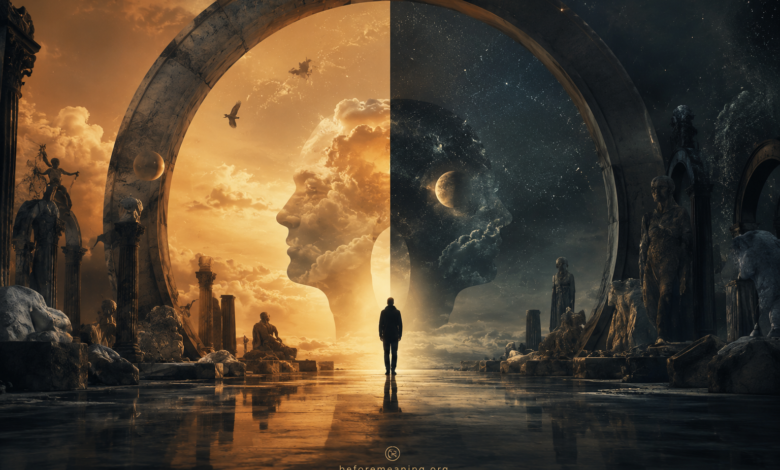
Human beings do not live by knowledge alone. We also live with uncertainty, the inevitability of death, loneliness, fear, loss, and the search for meaning. For this reason, belief is not merely an idea or a worldview. It touches one of the deepest layers of human experience. Perhaps belief is a natural consequence of the relationship the human mind forms with the unknown.
Part of the explanation may lie in the way our brains work. The human brain constantly searches for patterns in the world around it. Throughout our evolutionary history, this tendency provided a survival advantage. When something happens in our lives that we cannot fully explain, we often struggle to accept it as pure coincidence. Instead, the mind begins to connect the pieces, search for hidden relationships, and look for causes behind events.
Perhaps one of the most fundamental characteristics of the human mind is its reluctance to leave uncertainty untouched. As a result, we do not simply observe the world as it is. We search for reasons, build connections, and try to understand the unseen forces behind what we experience. Randomness makes us uncomfortable. We are driven to transform chaos into a meaningful story.
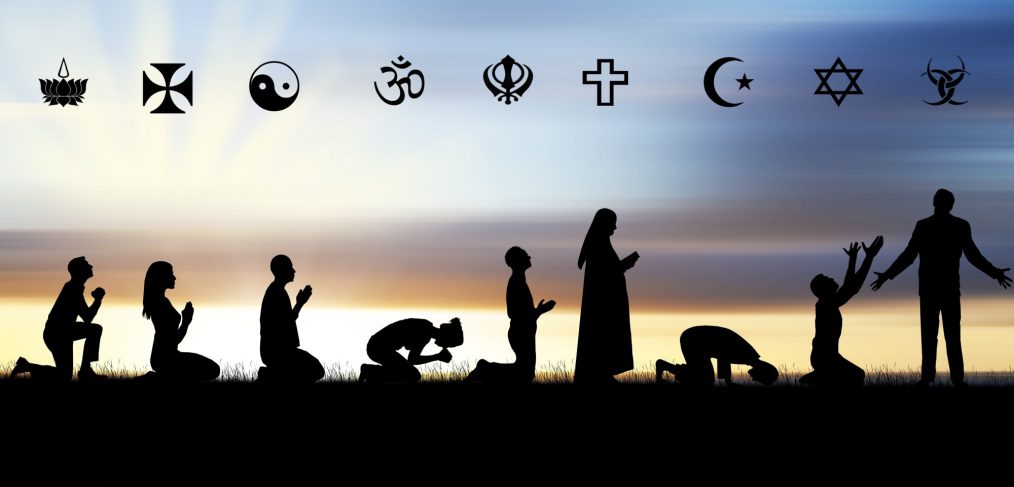
Yet the origins of belief cannot be explained through biology alone. The human mind struggles with absolute uncertainty. When confronted with death, loss, injustice, or events beyond our control, the belief that there may be some meaning behind what we experience can provide psychological stability. Thoughts such as “there must be a reason,” “perhaps this is not happening for nothing,” or “there may be an order I cannot yet see” can make the weight of reality a little easier to bear.
This is not limited to religion. People can become attached to science, ideologies, relationships, success, money, nations, or even themselves with a similar psychological intensity. The underlying mechanism is often the same. The human mind is not always well suited to living with complete uncertainty or confronting reality in its rawest form.
Belief also has a social dimension. Shared beliefs make collective life possible. Throughout history, societies have been shaped by common stories, shared values, and collective goals. Religions have been among the most powerful examples of this process. People who share the same rituals, moral frameworks, and hopes often form strong social bonds. The ability of large human groups to cooperate has frequently depended on systems of belief that create trust, identity, and a sense of belonging.
For some people, however, belief is neither a psychological necessity nor a social tool. Sometimes belief emerges at the very edge of thought itself. Why does the universe exist at all? How did consciousness arise? Why is mathematics so remarkably effective at describing nature? Why do the laws of physics exist in the first place?
Questions like these confront us with more than a lack of knowledge. They confront us with a deeper form of mystery. For some, belief becomes the acknowledgment that there may be a more fundamental layer of reality that we have not yet understood or explained.
At this point, an interesting question emerges: can a human being ever be completely free of belief? Probably not. Every person lives on the basis of certain assumptions. The idea that reality is understandable, that science can bring us closer to truth, that morality matters, or that tomorrow is worth living for forms part of the foundation of everyday life. None of these assumptions can be proven with absolute certainty, yet we rely on them nonetheless. At some point, every human being is forced to accept certain premises before any further reasoning can begin.
Perhaps this is why the real question is not whether we believe, but what we believe in.
And perhaps the most intriguing possibility is this:
Human beings do not always believe because they know what is true. Sometimes they believe because belief itself helps them carry the weight of reality.
Sometimes people believe not because they know what is true, but because belief helps them carry the weight of reality.

